Book now to get vouchers worth up to RM99! Limited time only!




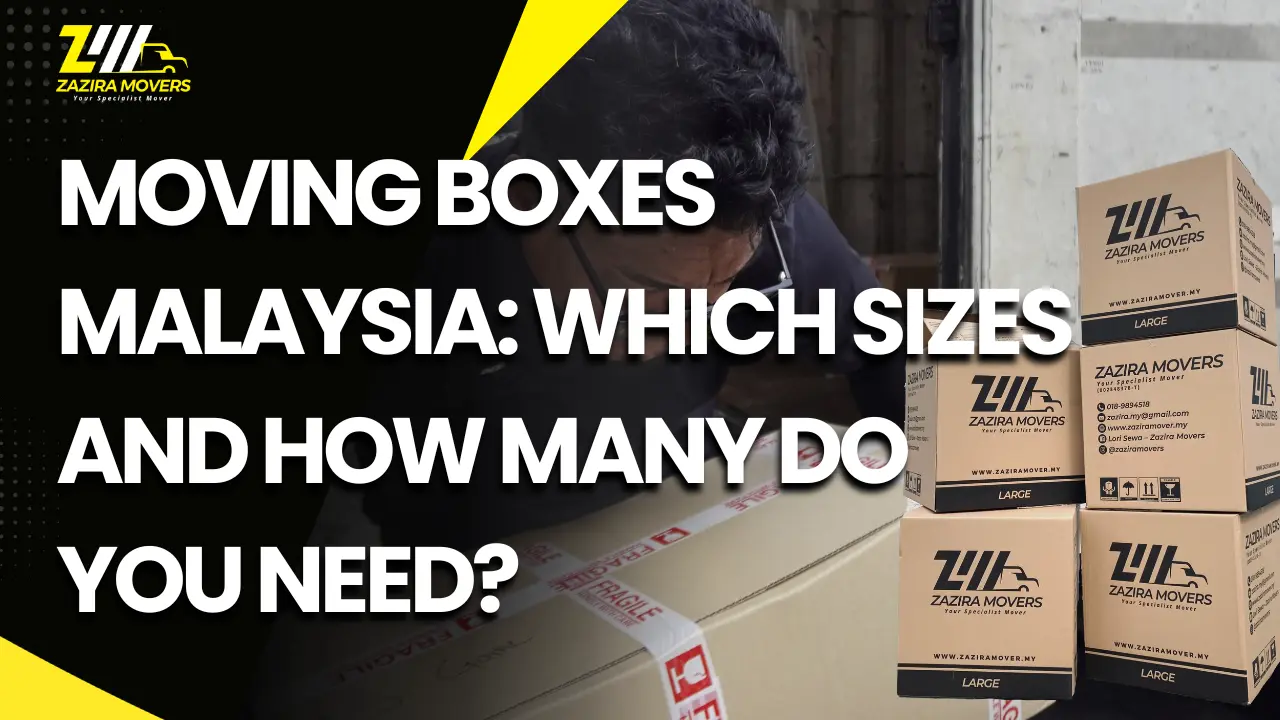
Which moving boxes should you buy, and how many do you need?
You may start with a neat plan: a few cartons for the bedroom, a few for the kitchen and one more for the things in the storeroom. Then you open the cabinets and realise the plates, pantry items, books, clothes, cables and spare bedding all need somewhere to go. The first box count suddenly looks optimistic.
For most household moves, a useful starting mix is small boxes for dense belongings, medium boxes for everyday items and larger boxes for light, bulky things. The quantity depends more on what you own than the number of bedrooms. Published supplier estimates can help you budget, but they are not a fixed standard or a Zazira Movers box allowance.
Quick answer: choose box size by the weight and shape of the contents, check the carton’s condition and stated rating, and estimate quantity room by room. Before buying, compare the cost of boxes, packing materials and collection or delivery with any moving package you are considering.
What makes a box suitable for a house move?
A moving box needs to hold its shape while it is filled, carried and placed with other cartons. Check the base, corners, seams and flaps before packing. A box that looks large but has a weak or softened bottom can be difficult to handle once it is full.
Cardboard cartons are available in different dimensions and constructions. Suppliers may label them small, medium, large or extra-large, but those labels are not a universal sizing system. One supplier’s medium carton may not match another supplier’s. Ask for the actual external dimensions when fit matters, and check whether those measurements describe the outside or inside of the box.
Look for cartons that close properly and have enough room for the contents plus protective material. The carton should not need to bow outward to fit everything. If the flaps barely meet or the sides bulge, split the contents between boxes or choose a more suitable size.
Which box sizes suit different belongings?
Think of size as a way to keep contents manageable. A large carton is not automatically the best choice. Heavy items in an oversized box can become awkward to lift, while light bedding may waste space in several small cartons.
Small boxes for dense or compact items
Small cartons are practical for books, files, tools, pantry cans and compact kitchenware. These items can become heavy quickly. Dividing them into smaller loads makes each box easier to carry and reduces pressure on the base. Keep similar belongings together where that helps you unpack.
Medium boxes for mixed household items
Medium cartons can suit folded clothes, shoes, toys, small appliances, bathroom items and general household belongings. They provide room for a useful quantity without encouraging you to fill the carton with a single heavy item. Check how the contents sit before taping it shut; fragile or sharp-edged objects need separation and cushioning.
Large boxes for light, bulky belongings
Large cartons can be useful for pillows, towels, blankets, soft toys and light bedding. They can also take up more space in a lorry, so avoid filling them with dense belongings just because there is spare room. A large box of books, crockery or tools can be much harder to handle than it looks.
When might an extra-large box work?
An extra-large carton may suit a selected bulky but lightweight item, such as cushions or a duvet. Check that the box stays rigid after packing and can be carried through doorways, corridors and lifts. If the contents shift freely, add suitable cushioning or use a smaller box.
Simple rule: pack heavy items in small cartons and reserve larger cartons for light belongings. If you are unsure, test the weight before sealing and divide the load if it feels awkward.
Single-wall or double-wall: what should you check?
Corrugated cartons use a fluted layer between flat paper liners. A single-wall carton has one fluted layer; a double-wall carton has two. That describes the construction, but it does not by itself tell you the exact safe load for every box.
For light belongings and a short move, a sound single-wall carton may be suitable. A double-wall carton may be worth considering for heavier contents, more stacking or items that need a firmer box. Still, condition, dimensions, board quality, closure and how the box is packed all matter. Double-wall construction does not remove the need to cushion fragile items or distribute weight.
Check whether the manufacturer or supplier provides a load rating or handling guidance. Do not assume that every box labelled double-wall carries the same weight. If there is no stated rating, use a conservative load, keep dense items in smaller cartons and do not stack cartons in a way that crushes the bottom layer.
For televisions, monitors and other delicate electronics, the original packaging may fit the product more closely. If it is no longer available, ask about suitable packing materials and handling requirements rather than relying on carton thickness alone.
Should you buy new or used moving boxes?
New cartons give you a consistent starting point: you can inspect the material before use and choose the sizes you need. They may be useful when you want matching cartons, do not have time to source used ones or need clean boxes for particular belongings. A new label does not automatically mean a stronger box, so check the construction and condition.
Used cartons can reduce the number of new boxes you need, but inspect each one individually. Check for damp patches, soft corners, torn seams, crushed fluting, persistent odour, stains, pests or old tape that prevents the flaps from closing. A used box may still be serviceable if it is dry, square and intact; another from the same batch may not be.
Keep used cartons for suitable belongings. A clean, firm box may work for linens or non-fragile household goods. Avoid using a carton with a weakened base for heavy books or kitchenware. Do not mix a questionable box into a stack simply because it looks similar to the others.
When comparing new and used options, consider the full task: price per carton, condition, size availability, collection or delivery, and whether you also need tape or protective materials. A lower price per box is only one part of the decision.
How many moving boxes might your home need?
There is no fixed number for a studio, apartment or landed home. Two households with the same floor plan can have very different packing needs because of the number of occupants, length of stay, kitchen contents, books, hobbies and storage areas.
As a starting reference, published supplier guides give estimates such as 15–25 boxes for a rented room or studio, 20–30 for a studio or one-bedroom home, 30–45 or 30–50 for a two-bedroom home, and roughly 40–70 for a three-bedroom home. One guide places a large four-bedroom landed home around 70–100 or more. These are seller-published planning examples, not a Malaysian industry average, Zazira package quantity or promise that your belongings will fit. The published ranges differ, which is a reason to count your own contents.
You can compare the different estimates in a supplier’s moving-box guide, its room-by-room estimate and another published box guide. Use them as a first budgeting reference, not a shopping list.
- Studio or rented room: start with the supplier ranges above, then count kitchen items, clothes and personal belongings.
- One-bedroom home: use the published 20–30 example as an initial reference. Add cartons only for belongings you have counted, such as a full bookcase or a large kitchen collection.
- Two-bedroom home: the published examples vary. Check each bedroom, kitchen, living area and storeroom rather than choosing the top of a range automatically.
- Three-bedroom home: published guides vary from around 40 to 70. The spread reflects different household inventories and estimation methods.
- Four-bedroom landed home: a supplier guide places some larger homes around 70–100 or more, but a lightly furnished four-bedroom terrace may need a different amount from a full semi-detached home.
For a more useful estimate, walk through the home with a note on your phone. Count the cupboards, drawers and shelves that contain loose items. Mark which furniture will travel assembled, which will be dismantled and which will not move. This prevents you from counting a wardrobe as both a furniture item and a stack of packed boxes.
Pay extra attention to the kitchen, storeroom, study and children’s areas. A few cabinets can hold more small objects than an entire bedroom. If you have already decluttered, do not use a supplier estimate intended for a fuller household.
How should you pack different household belongings?
The right size helps, but packing method matters too. Keep the contents stable, separate breakable items and avoid filling empty spaces with objects that can scratch or press against one another.
Books, files and documents
Pack books in small cartons so the box does not become excessively heavy. Lay books flat or place them spine-down in an organised row. Use folders or document boxes for papers that need to remain together. Keep identity documents, contracts, medication, keys and valuables with you instead of putting them in a general carton.
Clothes, bedding and soft items
Fold clothes and place them in medium cartons, or use a larger box for light items such as towels and bedding. Do not pack damp clothing or linens. If you are using a large box, avoid mixing in heavy objects just to fill the remaining space.
Kitchenware and glass
Use a smaller or medium carton for plates, cups and other dense kitchenware. Wrap or separate individual pieces with suitable protective material, and fill spaces so items do not rattle. Place heavier pieces at the bottom and lighter pieces above them. Mark the carton clearly, but do not rely on a label as a substitute for careful handling.
Electronics and cables
Keep accessories with the device they belong to by placing them in a labelled pouch or a small carton. Photograph cable connections before disconnecting equipment if you will need to reconnect it later. Use original packaging when it is available and appropriate. For large or delicate electronics, confirm the handling plan before the move rather than putting the item into an oversized carton.
Bathroom, utility and miscellaneous items
Keep toiletries upright and close any lids before packing. Separate liquids from paper goods and electronics. Small household tools can go into a compact carton, but sharp edges should be covered and secured. Keep cleaning products that may leak separate from clothes, bedding and documents.
How should you seal, label and prepare each box?
Use packing tape suited to the carton and close the bottom securely before adding contents. Reinforce the base seam with tape, especially when the carton will hold dense belongings. Build the box on a flat surface and check that the base stays closed as you add items.
Distribute weight across the bottom instead of placing all the heavy objects in one corner. Leave enough room to close the top flaps without pressing hard against the contents. If the sides bow, the box is too full or too heavy; split the items before sealing it.
Label the top and at least one side with the destination room and a short content description, such as “Kitchen — mugs” or “Study — files”. Add a fragile note when it is useful, and identify which side should remain upright if the contents require it. Use labels that remain readable after the cartons are stacked.
Group boxes by room and keep one clearly identified carton for items you will need soon after arrival. Do not put important documents, medication, keys, wallets or essential electronics into the general moving load unless you have deliberately planned their handling.
Where can you buy moving boxes in Malaysia?
Common options include packaging suppliers, online stores, home-improvement retailers, marketplace sellers and moving companies that sell cartons or include them in selected packages. Each route suits a different need. A nearby shop may be convenient for a few cartons, while a supplier may offer a wider mix of sizes or quantity options.
Before travelling or placing an order, check the actual dimensions, wall construction, condition, minimum order, available quantity, collection point and delivery terms. Confirm that the seller serves your location and ask how delivery is arranged. Search results can show locations or stock notices that change, so verify those details with the seller before making plans.
If you are considering cartons from a supermarket or a neighbour, inspect them first. A free box is not automatically a good moving box. It may be damp, torn, contaminated by previous contents or a size that is difficult to stack. Use only cartons that close securely and suit the weight and type of belongings inside.
Zazira Movers’ current FAQ says customers can buy boxes separately, collect them at the Seremban headquarters or arrange delivery. The FAQ does not state a current box price, stock level or quantity, so confirm those details before travelling or relying on the cartons for a move. Check Zazira Movers’ current box-purchase information.
What affects moving-box prices?
There is no single price that applies to every moving box. The amount can depend on the box’s dimensions, construction, new or used condition, order quantity, supplier and location. Collection and delivery arrangements can also change the total cost.
Remember to include supplies such as packing tape, paper, bubble wrap or other cushioning if you need them. Some suppliers sell these separately; some moving packages list selected packing materials. Check the actual inclusions before comparing quotes. Do not assume that “boxes included” means an unlimited number or that every material is covered.
Compare the full cost of obtaining and preparing cartons, not just a price shown per box. If the seller is far away, account for how you will collect the order. If you need only a few cartons, delivery may affect the decision more than the unit price. If you need many boxes, confirm the available sizes and quantity before making the trip.
For a fair comparison, record the same details for each option: box sizes, condition, number, delivery or pickup arrangement and other supplies. This makes it easier to decide whether to buy cartons separately or ask about a package that includes them.
Do moving packages include boxes?
No, boxes are not listed in every Zazira Movers package. The current package page lists moving boxes and packing materials under Gold and Gold+, while Basic, Bronze and Silver list boxes as not included. Gold+ also lists unpacking support.
The page does not specify a universal number of cartons or exact box dimensions. Before choosing a package, ask what quantity and materials are included in the quotation, whether packing work is part of the agreed scope and what you need to prepare yourself. “Packing materials included” and “every item packed for you” are not automatically the same promise.
If you are comparing a box-only purchase with a moving package, compare the full service you actually need. The package may include moving support and materials, while a separate box purchase covers only the cartons and the confirmed collection or delivery arrangement. Review the current moving-package inclusions before requesting a quote.
Which box-buying mistakes should you avoid?
- Buying only large cartons: they may look efficient but can become difficult to carry when filled with books, plates or tools.
- Ordering before checking what is moving: furniture that is not being dismantled or loose items in a storeroom can change your carton needs.
- Assuming supplier size labels match: compare actual dimensions before mixing boxes from different sellers.
- Trusting a used box without inspection: check the base, corners, seams, smell and any signs of moisture or pests.
- Ignoring supplies and transport: tape, cushioning, pickup or delivery can affect the total buying cost.
- Assuming every mover package includes cartons: confirm the package and final quotation; the current Zazira page lists boxes only for Gold and Gold+.
- Overfilling to use every centimetre: a bulging box is harder to close and may put pressure on the contents.
- Mixing important items into general cartons: keep documents, medication, keys and valuables under your personal control.
Frequently asked questions about moving boxes
What size moving box should I buy first?
Start with small cartons for dense items such as books and kitchenware, then choose medium and large cartons based on the belongings you have counted. Check dimensions before ordering.
How many boxes do I need for a three-bedroom house?
Published supplier guides suggest different ranges, commonly between about 40 and 70 cartons. Use that only as an initial budget and count your actual kitchen, wardrobes, study and storeroom contents.
Are large boxes suitable for books?
Usually, a small box is easier to handle for books because books are dense. A large carton can become awkward before it is full.
Are used cartons suitable for moving?
Some used cartons may be suitable if they are dry, clean and structurally sound. Inspect every box and match it to the weight and fragility of its contents.
Does every Zazira Movers package include moving boxes?
No. The current package page lists boxes in Gold and Gold+, not Basic, Bronze or Silver. Confirm the box quantity and other inclusions in your quotation.
Can I buy boxes from Zazira without booking a move?
Zazira Movers’ current FAQ says customers can buy boxes separately, collect them at the Seremban headquarters or arrange delivery. Confirm the current price, quantity and arrangements directly through the official information page.
Need boxes as part of a move?
If you are arranging a full house move, check the package details and confirm the box quantity, materials and packing tasks that would appear in your quotation. For a box-only purchase, use the separate-purchase information rather than assuming a moving package is required.
Check Zazira’s current box options