Book now to get vouchers worth up to RM99! Limited time only!




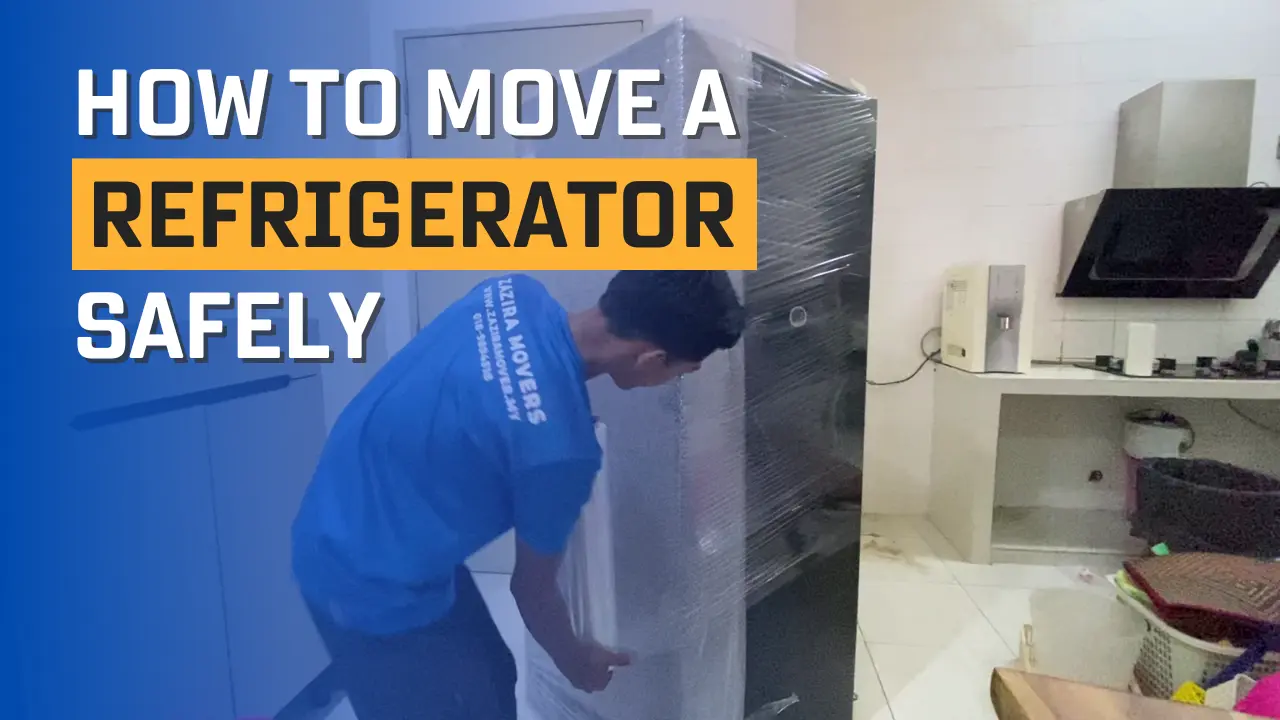
How to Move a Refrigerator Safely Without Damaging It
A refrigerator is one of the heaviest, largest and most sensitive electrical appliances to move during a house move. If it is handled roughly, left lying down for too long or switched on immediately after transport, the compressor and cooling system may be affected.
That is why the process of moving a refrigerator needs more care than boxes, chairs or lighter items. You need to empty it, defrost it, dry the inside, secure the doors, wrap the body and keep it stable inside the lorry.
Quick answer: Empty the refrigerator, switch off the power, defrost it at least a few hours in advance, dry away any water, remove the shelves, secure the doors, wrap the body and transport it in an upright position. After arrival, wait before switching it on again, especially if the refrigerator has been tilted or laid down.
Why Should a Refrigerator Be Moved Carefully?
A refrigerator contains a compressor, refrigerant pipes, glass shelves, heavy doors and electrical components. Mistakes while lifting or transporting it can cause expensive damage.
The risks can include:
- The refrigerator door opening during transport
- Glass shelves breaking or cracking
- The refrigerator body becoming dented or scratched
- The water hose or power cable becoming damaged
- The compressor being affected because oil moves into the cooling lines
- The refrigerator tipping over when the lorry turns or brakes
- Flooring being damaged when the refrigerator is dragged
Important tip: Do not try to lift a large refrigerator on your own. Use at least two people and equipment such as a trolley, moving straps or an appliance dolly if available.
9 Refrigerator Moving Tips for a Safe Move
Empty All Food and Drinks
Remove all food, drinks, sauces, bottles and containers from the chiller and freezer compartments.
Items left inside can move, break or increase the weight of the refrigerator while it is being lifted.
- Throw away food that has expired
- Place frozen food in a cooler box
- Dry any leaking containers or bottles
- Do not use the refrigerator as storage for moving items
Switch Off the Refrigerator and Unplug It
Disconnect the power supply in advance before the move begins. Coil the power cable neatly and secure it so that it does not get caught while the refrigerator is being lifted.
If the refrigerator has a water connection or ice maker, turn off the water supply and remove the hose carefully.
Defrost the Refrigerator in Advance
A refrigerator with a layer of ice should be defrosted before it is moved. Otherwise, the ice may melt inside the lorry and cause water to leak onto the floor, boxes or other furniture.
The defrosting time depends on the model and the amount of ice. For greater safety, carry out this process at least several hours or one day before moving.
Dry the Inside
After the ice has melted, wipe all water from the walls, shelves, drawers and bottom section of the refrigerator.
Leave the door open for a while so that air can dry the inside and reduce the risk of a musty smell.
Remove Shelves, Drawers and Loose Parts
Glass shelves, egg trays, drawers and internal accessories can move during transport.
Remove these parts and wrap them separately. If they cannot be removed, use suitable tape to hold them in place.
Do not apply strong tape directly to sensitive surfaces. Some types of tape can leave adhesive behind or damage the refrigerator finish.
Secure the Refrigerator Doors Safely
Make sure the freezer and chiller doors do not open while the refrigerator is being lifted or transported in the lorry.
Use moving straps, soft rope or stretch film. Do not use rope that is so tight that it damages the door seals.
Wrap the Refrigerator with Stretch Film and a Moving Blanket
Wrap the refrigerator body to reduce the risk of scratches, dents and damage while moving it through narrow doorways or placing it next to other items.
Protective materials that can be used include:
- Stretch film
- Moving blanket
- Bubble wrap for the corners
- Corner protector
- Straps to secure the protective materials
Use a Trolley and Keep the Refrigerator Upright
The safest way to lift a refrigerator is by using an appliance trolley or a heavy-duty trolley.
Tilt it only as much as necessary to position the trolley. Avoid laying the refrigerator completely flat unless it is unavoidable.
- Make sure the route is clear of obstacles
- Protect the floor with boards or protective padding
- Use more than one worker
- Communicate clearly when moving up or down stairs
Secure the Refrigerator Firmly Inside the Lorry
The refrigerator should be placed upright and secured against the side of the lorry. Do not leave it standing without support.
Use straps and a moving blanket to reduce movement when the lorry brakes, turns or travels over uneven roads.
Can You Lay a Refrigerator Down During a Move?
In general, keeping the refrigerator upright is the safest option. Laying a refrigerator down can cause compressor oil to flow into the cooling lines.
If the space or access route genuinely requires the refrigerator to be tilted or laid down, check the manufacturer’s manual first. Some models can only be laid down on a specific side.
Avoid laying the refrigerator on its back or on its doors. This position can damage the pipes, cables, hinges or door surfaces.
How Long Should You Wait Before Turning On a Refrigerator?
The waiting time depends on how the refrigerator was moved and the manufacturer’s instructions.
- Condition during the move
- The refrigerator remained upright throughout transport
- Recommended action
- Wait a few hours before switching it on again or follow the manufacturer’s manual.
- Condition during the move
- The refrigerator was tilted significantly
- Recommended action
- Allow more time so that the compressor oil can return to its original position.
- Condition during the move
- The refrigerator was laid down during transport
- Recommended action
- Stand it upright again and wait longer before switching it on. Refer to the model manual for the exact waiting period.
Do not plug the refrigerator in immediately after it has been unloaded from the lorry. Allowing it to rest can help reduce the risk of compressor damage.
How to Carry a Refrigerator Up or Down Stairs
Moving a refrigerator through stairs requires more strength and control. A small mistake can cause the refrigerator to fall or injure a worker.
Safety steps that should be followed:
- Use at least two people
- Use an appliance trolley with straps
- Make sure the stairs are dry and not slippery
- Remove obstacles along the route
- Stop if the hand position or trolley becomes unstable
- Do not rush
For high-floor homes without a lift, inform the movers before a quotation is prepared.
How to Protect Flooring When Moving a Refrigerator
Dragging a refrigerator directly across the floor can scratch tiles, vinyl, laminate or wooden flooring.
Use:
- Furniture sliders
- Thick cardboard
- Thin boards
- Rubber padding
- A suitable wheeled trolley
Do not use thin fabric that can easily get caught or slip while pushing the refrigerator.
Common Mistakes When Moving a Refrigerator
- Not removing food and drinks
- Not defrosting the refrigerator
- Leaving water inside the refrigerator
- Not securing the doors
- Not removing the glass shelves
- Lifting the refrigerator alone
- Dragging the refrigerator directly across the floor
- Laying the refrigerator down without checking the manual
- Not securing the refrigerator inside the lorry
- Switching on the refrigerator immediately after arrival
Checklist Before the Moving Lorry Arrives
All food and drinks have been removed.
The refrigerator has been switched off and unplugged.
The freezer has been fully defrosted.
The inside has been dried.
The shelves and drawers have been removed or secured.
The doors have been secured with straps or stretch film.
The exit route from the house has been cleared.
The movers have been informed about the floor level and lift access.
Do You Need Professional Movers to Move a Refrigerator?
For a small refrigerator and a landed home with an easy access route, some customers may be able to manage the move with help from several people. However, large, side-by-side, multi-door refrigerators or refrigerators moved from multi-storey homes are safer when handled by experienced movers.
Professional movers can usually help with:
- Sufficient manpower
- Trolleys and straps
- Wrapping and moving blankets
- Loading and unloading
- Stable positioning inside the lorry
- Handling through stairs or lifts
Before booking, provide the movers with photos of the refrigerator, the property type, floor level, lift details and the width of the access route.
House Moving Lorry Services in Peninsular Malaysia
Zazira Movers provides house moving lorry services, electrical appliance moving, office relocation and professional moving assistance throughout Peninsular Malaysia, subject to location and schedule availability.
For Sabah and Sarawak, enquiries are reviewed for the delivery of goods from Peninsular Malaysia to Sabah or Sarawak. This is not a local house-moving or local pickup service in Sabah or Sarawak.
Need Help Moving a Refrigerator?
Share a photo of the refrigerator, pickup location, delivery location, floor level and lift details so we can review the suitable lorry, manpower and wrapping requirements.
Check Price and Book MoversFrequently Asked Questions About Moving a Refrigerator
Can you lay a refrigerator down during a move?
Keeping it upright is safer. If it must be laid down, check the manufacturer’s manual and make sure it is placed on the permitted side.
How long should you wait before turning on a refrigerator?
The waiting time depends on how the refrigerator was transported. If it remained upright, wait a few hours or follow the manual. If it was laid down, wait longer before switching it on.
Do you need to defrost a refrigerator before moving it?
Yes. Defrosting helps prevent water from leaking inside the lorry and protects boxes or other furniture from getting wet.
How should you wrap a refrigerator?
Secure the doors first, then use stretch film, a moving blanket and straps. Protect the corners if the route through the property is narrow.
Can one person lift a refrigerator alone?
It is not recommended. Refrigerators are heavy and can easily become unbalanced. Use at least two people together with a trolley or appliance dolly.
Can movers help move a refrigerator?
Yes, depending on the selected package. Provide photos, measurements, locations, floor levels and lift access so the manpower and equipment requirements can be assessed.
Tags